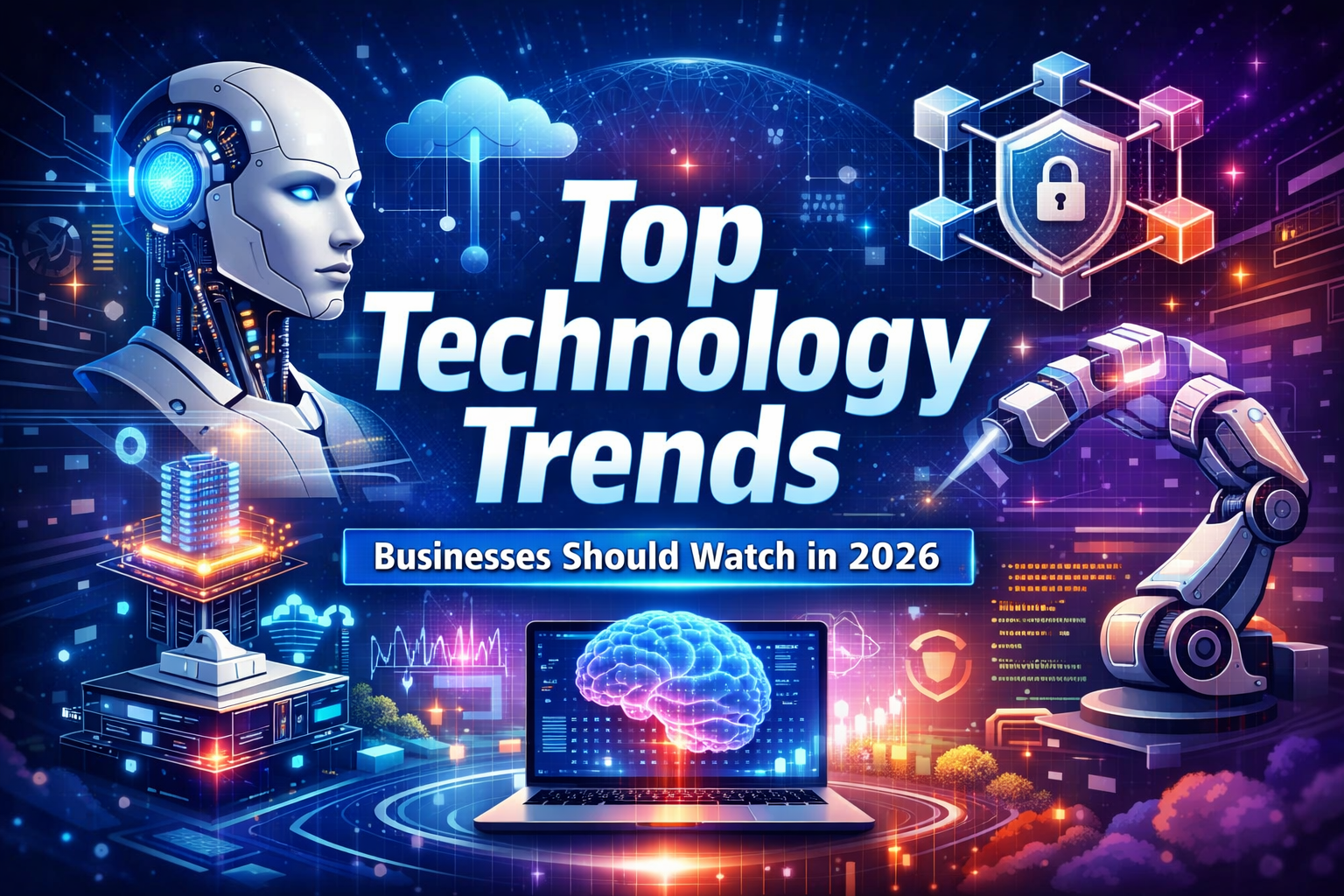
Technology is evolving faster than ever. What seemed futuristic a few years ago is now becoming part of everyday business operations. From artificial intelligence to automation and smarter digital infrastructure, companies are rapidly adopting new technologies to stay competitive. Businesses that understand and adapt to these trends early are the ones that grow faster and operate more efficiently.
In 2026, technology is no longer just a support system for businesses—it is becoming the core driver of innovation, productivity, and customer experience.
Artificial Intelligence Becoming Mainstream
Artificial Intelligence (AI) is no longer limited to large tech companies. Today, startups, small businesses, and enterprises are integrating AI into their operations. AI-powered tools are helping businesses automate repetitive tasks, analyze massive datasets, and make faster decisions.
Chatbots, smart recommendation systems, predictive analytics, and AI-driven automation are now widely used across industries. AI is also transforming customer service by enabling 24/7 support and faster problem resolution. As AI tools become more accessible and affordable, businesses will continue to adopt them at a much larger scale.
Rise of Generative AI
Generative AI is one of the most talked-about technological breakthroughs in recent years. Unlike traditional AI, generative AI can create content such as images, videos, code, and even complex data models.
Businesses are using generative AI to speed up product development, automate coding tasks, create design prototypes, and generate personalized content. Developers are also integrating AI copilots into their workflow, which significantly increases productivity and reduces development time.
This technology is expected to become a standard part of software development, design, and digital product innovation.
The Growth of Edge Computing
As more devices become connected through the Internet of Things (IoT), traditional cloud systems sometimes struggle with latency and data processing speed. Edge computing solves this problem by processing data closer to where it is generated.
Instead of sending all information to centralized servers, edge computing allows devices to analyze data locally. This reduces delays, improves performance, and enhances security.
Industries such as manufacturing, healthcare, transportation, and smart cities are rapidly adopting edge computing to power real-time decision-making systems.
Cybersecurity Becoming a Top Priority
With increasing digital transformation comes a rising risk of cyber threats. Businesses today are more vulnerable to data breaches, ransomware attacks, and sophisticated hacking attempts.
Modern cybersecurity is no longer limited to firewalls and antivirus software. Companies are now investing in advanced security frameworks such as Zero Trust architecture, multi-factor authentication, AI-based threat detection, and secure cloud infrastructure.
Protecting data, customer information, and digital assets has become one of the most critical responsibilities for organizations operating in the digital age.
The Expansion of Web3 and Decentralized Technologies
Web3 technologies are gradually reshaping how digital platforms operate. Instead of centralized systems controlled by a few companies, Web3 promotes decentralized networks powered by blockchain technology.
This shift enables greater transparency, improved security, and user ownership of digital assets. Technologies such as decentralized applications (dApps), smart contracts, and blockchain-based identity systems are gaining traction across multiple industries.
While Web3 is still evolving, it has the potential to redefine digital ownership, online transactions, and internet governance in the coming years.
The Future of Smart Automation
Automation is becoming smarter with the integration of AI and machine learning. Businesses are now deploying intelligent automation systems that can handle complex workflows without human intervention.
From automated supply chain management to AI-driven analytics dashboards, smart automation is helping companies reduce operational costs while improving efficiency.
This trend is especially visible in industries like logistics, finance, and manufacturing where large-scale operations require constant monitoring and optimization.
Final Thoughts
Technology trends are reshaping how businesses operate and innovate. Artificial intelligence, generative AI, edge computing, cybersecurity, Web3, and smart automation are not just buzzwords—they represent the future of digital transformation.
Organizations that stay updated with these technological advancements will be better positioned to adapt, innovate, and grow in an increasingly digital world.
At Digitace Tech Solutions, we closely follow emerging technologies and continuously explore new ways to help businesses leverage modern tech solutions for efficiency, scalability, and long-term success. 🚀


0 Comments